
If you’ve landed here because you’re looking at insulating an older property then you need to know one thing first – Insulating an older property is one of the most misunderstood areas of traditional building work — and one of the most consequential if it goes wrong.
Based in Much Wenlock, I carry out breathable insulating lime plaster work across Shropshire and the surrounding counties, helping owners of period and traditionally constructed properties improve thermal performance without compromising the way their buildings manage moisture.
Not every insulation solution is suitable for a solid-wall building. Many modern systems trap moisture, cause interstitial condensation, and create the very damp problems they were supposed to solve. Every insulating lime plaster system I install is specified with breathability and compatibility at the forefront — because getting it wrong is far more expensive than getting it right.
Solid-wall buildings such as stone cottages, Victorian brick terraces, timber-framed properties and traditionally built farmhouses were never designed with a ‘vapour barrier’ in mind. They manage heat and moisture through the fabric of the building itself, and any insulation system introduced needs to work within that principle. Fit the wrong product and you don’t just lose money, you risk trapping moisture in the wall structure, accelerating decay in timber elements, and creating persistent damp that’s difficult and costly to resolve.
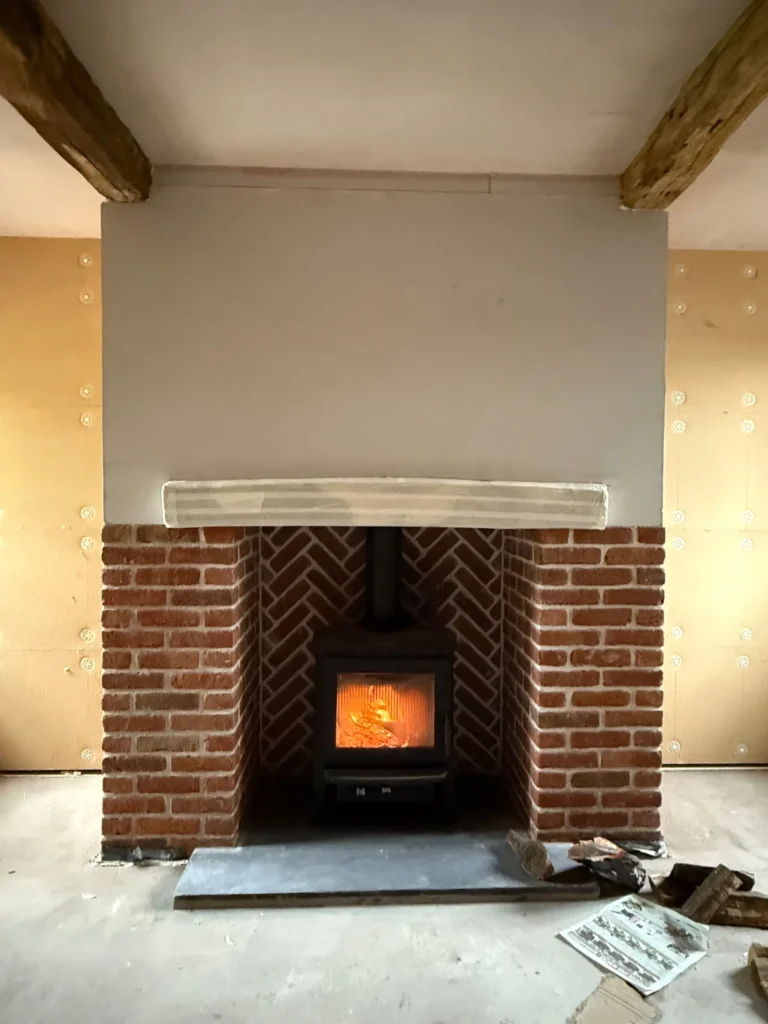
The right insulating lime plaster system improves thermal performance, adds a degree of hygroscopic buffering, and leaves the wall able to breathe. The wrong one seals it. That distinction is everything in an older Shropshire property, and it’s why material selection and correct specification matter as much as the installation itself.



Before any insulating lime plaster system is specified or installed, I carry out an onsite assessment first. Every older property is different — the masonry type, existing moisture levels, and how the wall currently manages breathability all influence which system is appropriate and which ones aren’t. A product that works well on a dry brick wall in Shrewsbury may be entirely wrong for a damp rubble stone cottage in the Shropshire Hills, and getting that call wrong causes problems that are far more disruptive and costly to fix than taking the time to get the specification right from the start.
There’s no one-size-fits-all answer when it comes to insulating traditional buildings which is exactly why I don’t offer just a single system. I recommend what’s right for the wall in front of me.
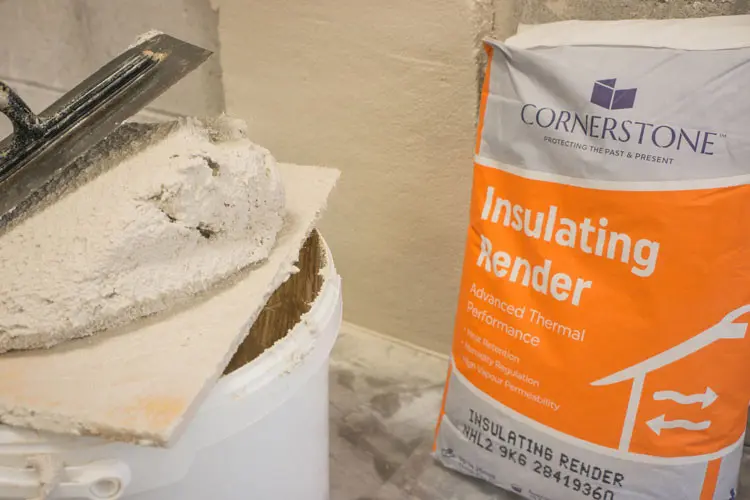
A lightweight, well fibred breathable insulating render suitable for application to solid masonry walls. Cornerstone provides a meaningful improvement in thermal performance while remaining fully vapour-permeable — making it a practical option for stone and brick properties where internal wall depth is limited and breathability is non-negotiable. This is applied much in the same way that a traditional lime plaster is applied – A Scratch Coat, Float Coat and Final Skim Coat. Cornerstone insulating render is by far one of my favourite options when it comes to insulating older properties. You can read more information about the product here.
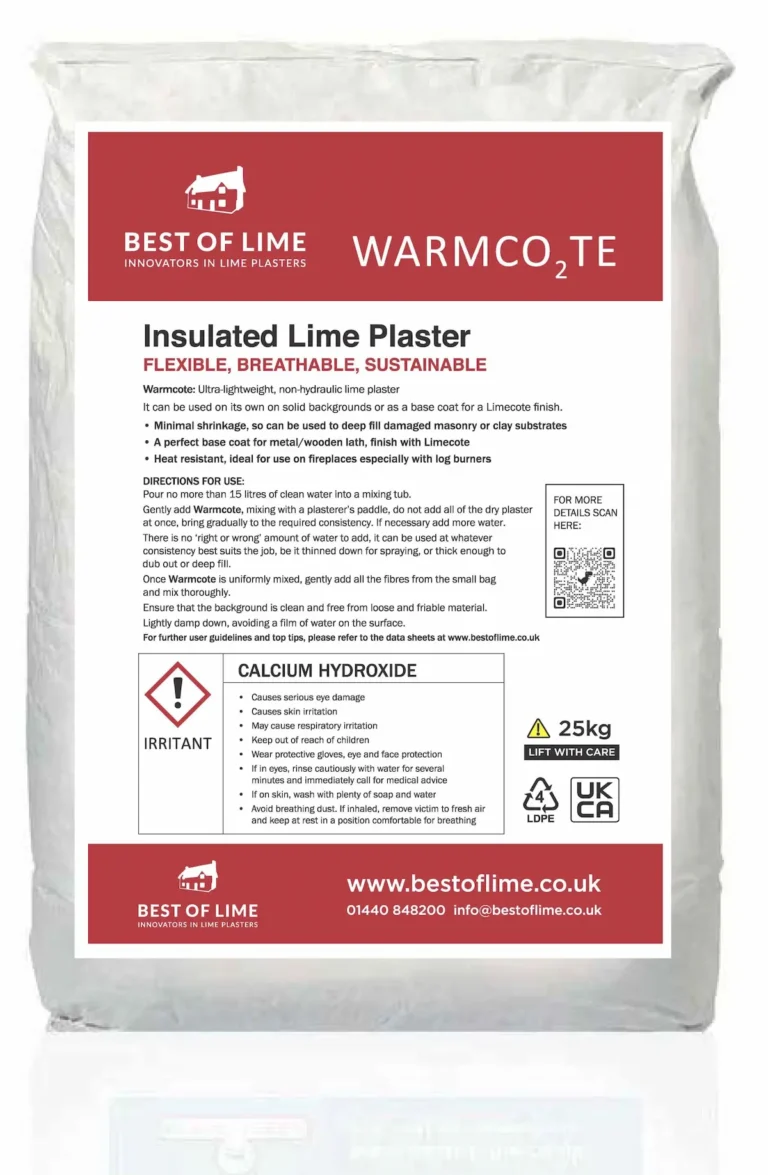
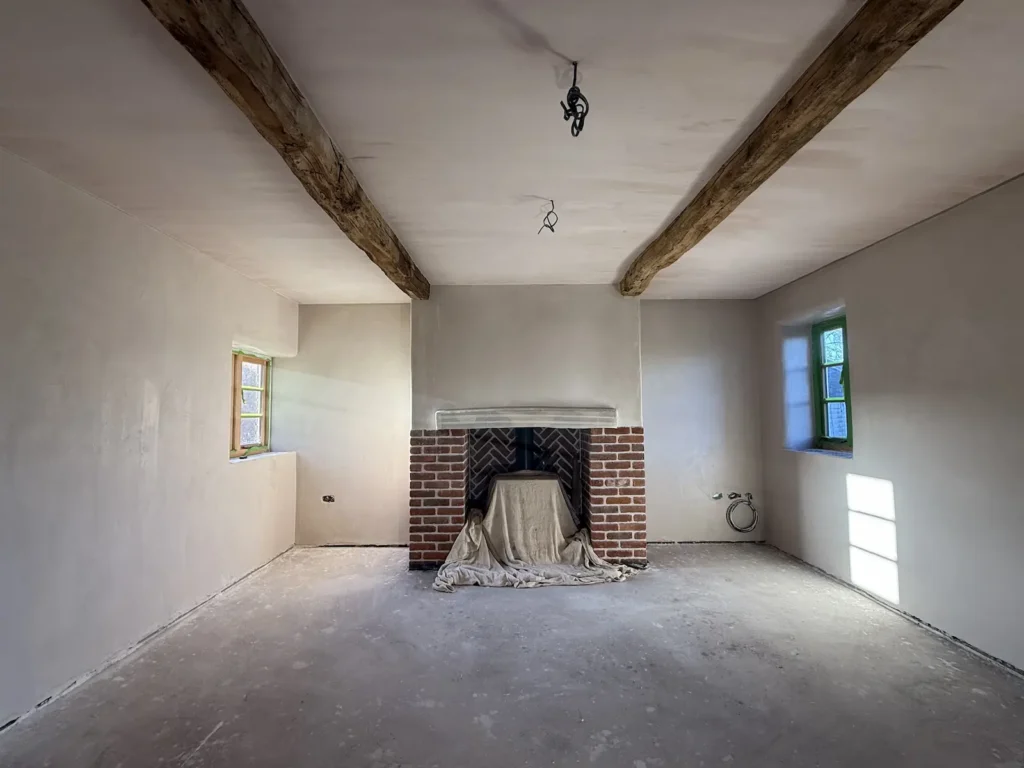
Warmcote is a pre-mixed, non-hydraulic insulating lime plaster from Best of Lime, formulated specifically for use on traditional solid-wall buildings. It combines thermal improvement with the breathable, hygroscopic properties of lime — applied as part of a compatible lime plaster system, it improves comfort and reduces heat loss without introducing moisture risk. This again is applied much like a traditional three coat lime plaster system and can also be applied over any boarded systems like woodwool or woodfibre and cork as a further layer of breathable insulation.
(Approved Installer) The Warmshell system from Lime Green is one of the most well-regarded breathable internal wall insulation systems available for traditional buildings. As a recognised installer, I carry out full Warmshell installations to the system specification — combining insulated woodfibre boards with the compatible Solo lime plaster finish – for a thermally efficient, fully breathable result. Particularly well suited to listed buildings and properties where EPC improvement is needed without compromising historic fabric.
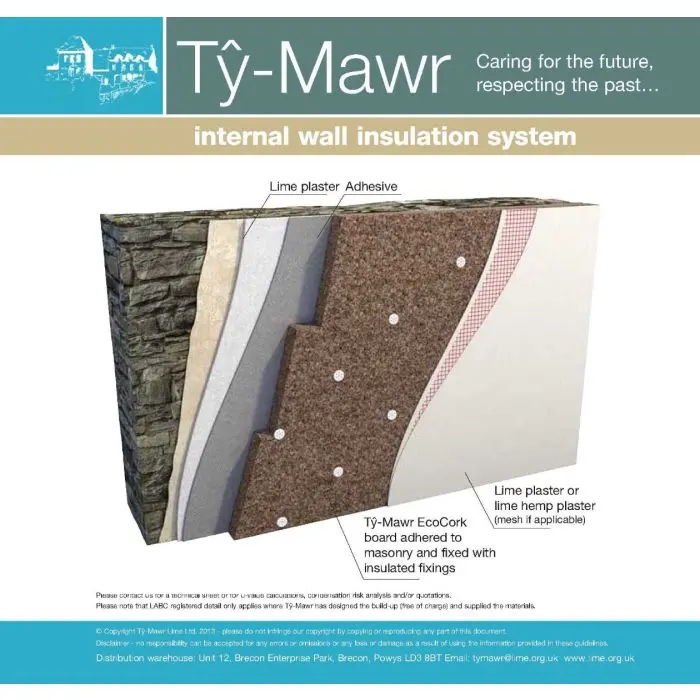
Natural cork is one of the oldest insulating materials in existence and one of the most compatible with traditional construction. Breathable, flexible, and naturally resistant to mould, cork board can be used as part of an internal insulation system in conjunction with lime plaster finishes. It’s a particularly sympathetic option for listed buildings or properties where a purely natural material specification is preferred.
Insulating lime plaster isn’t a straight swap for standard lime plaster — the specification, preparation and build-up vary depending on the system, the substrate and what the building needs. Here’s a general overview of how a typical installation comes together:
Before any product is selected, the wall condition, moisture levels and existing construction need to be properly understood. The wrong system on the wrong wall causes problems — this stage is where the right approach is established
Existing incompatible materials are removed, the substrate is cleaned and any remedial work carried out before installation begins. No insulating system performs well over a compromised base.
Whether that’s a cork board fixed system, a Warmshell installation or a direct-applied insulating render, each system is installed to specification — with the correct fixings, bonding agents and build-up for the product being used.
All systems are finished with a compatible breathable lime plaster coat — ensuring the completed wall performs as a unified, vapour-open system from substrate to surface. This is usually a fine lime putty skim but other systems use dedicated top coats.
If your property was built before around 1919 with solid walls, the answer is almost certainly yes — with the right system. Modern rigid foam boards and impermeable renders have no place in a traditionally constructed building, but that doesn’t mean you have to choose between comfort and building health. Breathable insulating lime plaster systems are specifically developed for this scenario, and when correctly specified and installed, they make a genuine difference to how a building feels to live in.
If you’re in Shropshire and you’re considering internal insulation on a period property, particularly a listed building or a stone cottage — I’d strongly recommend having a conversation before committing to anything. The wrong choice at this stage is expensive to undo.
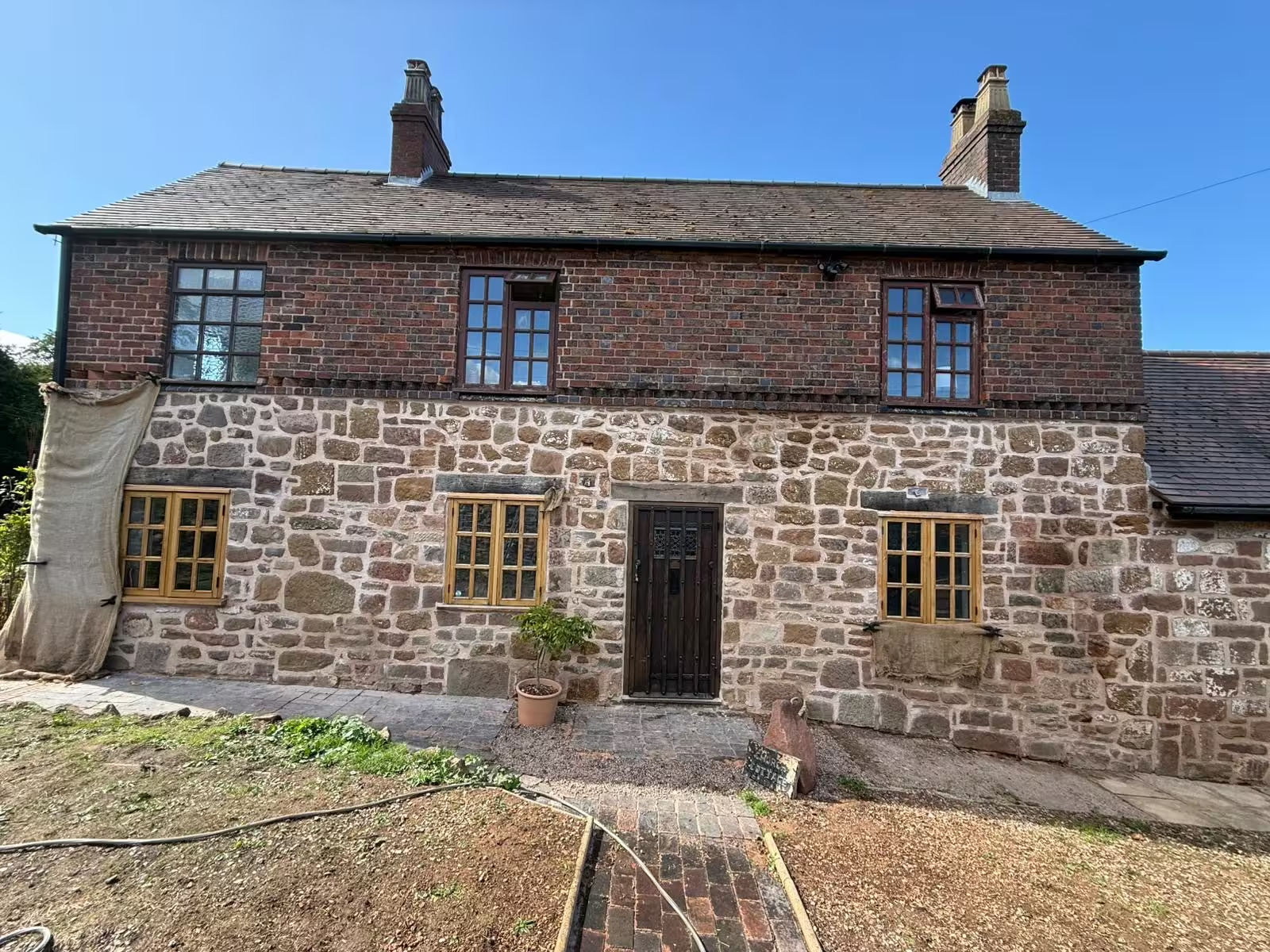
Insulating lime plaster sits at the intersection of thermal performance and traditional building conservation — and it’s an area where experience and product knowledge genuinely matter. As an experienced lime plasterer and someone who works exclusively with breathable lime systems, I can assess what your building needs and recommend the right solution with confidence — not just the product that’s easiest to apply.
Covering Much Wenlock, Shrewsbury, Ludlow, Bridgnorth, Telford, Church Stretton and the wider Shropshire area.
If you’re looking for lime plastering, lime pointing or stonework repair in Shropshire then please feel free to get in touch via the form below.
Every property and every job is a unique story, requiring an in-person survey to enable us to give you the best advice. To arrange a tailored on site quote, please use the form below or give us a call to get in touch.
I regularly post all of my current lime plastering and lime pointing work across Shropshire and daily updates on Instagram! Give me a follow or check out my page to keep up to date or get touch.
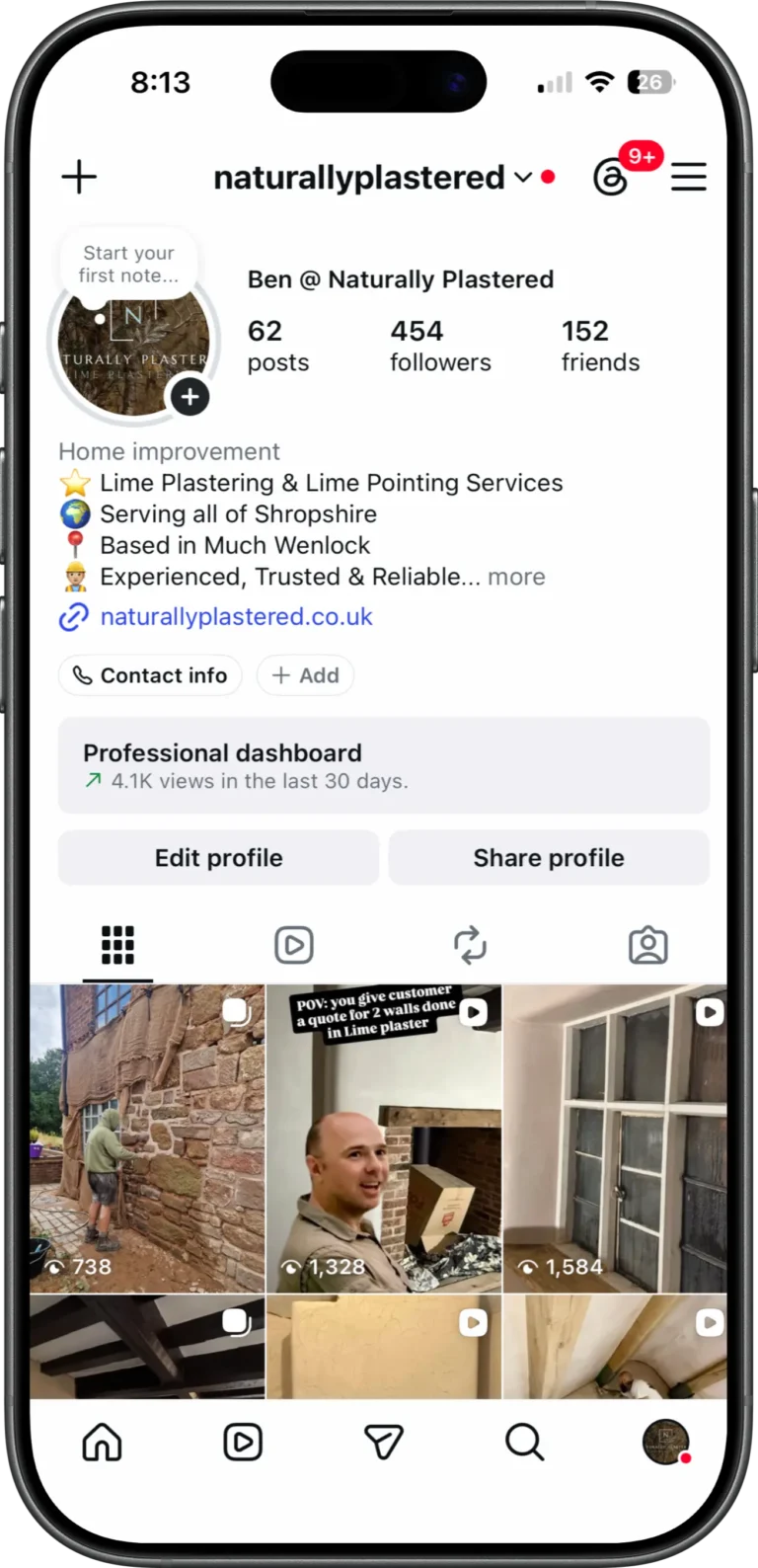
From replacing incorrectly applied gypsum plasters on a townhouse in Shrewsbury to restoring beautiful farmhouses in Market Drayton and renovating small cottages in Bridgnorth, I’ve been kept busy lime plastering just about everywhere in Shropshire. Here’s what some of my clients have said..
Insulating lime plaster throws up plenty of questions — especially when you’re trying to weigh up different systems, understand what’s actually breathable, and work out what’s genuinely suitable for your property versus what’s just being marketed as a traditional solution. Below I’ve answered the questions I hear most often from Shropshire homeowners considering insulating lime plaster for the first time. If yours isn’t covered, give me a call — I’m always happy to talk through what your walls actually need before any system is specified or committed to.
Three-coat lime plaster systems using traditional non-hydraulic lime mortars.
Improve comfort and thermal performance of older properties whilst maintaining breathability.
Traditional stone repairs, rebuilding stonework and masonry conservation in Shropshire.
Breathable repointing for stone and brick buildings using appropriate lime mortars.
WhatsApp Me

Currently Accepting New Projects
Traditional Lime Plastering and Heritage Lime Pointing Services for Shropshire’s Older Properties.
Send A Message
Fill in the form below and I will be in touch as soon as possible to discuss your requirements.
No spam. Your details are only used to contact you regarding your enquiry.