
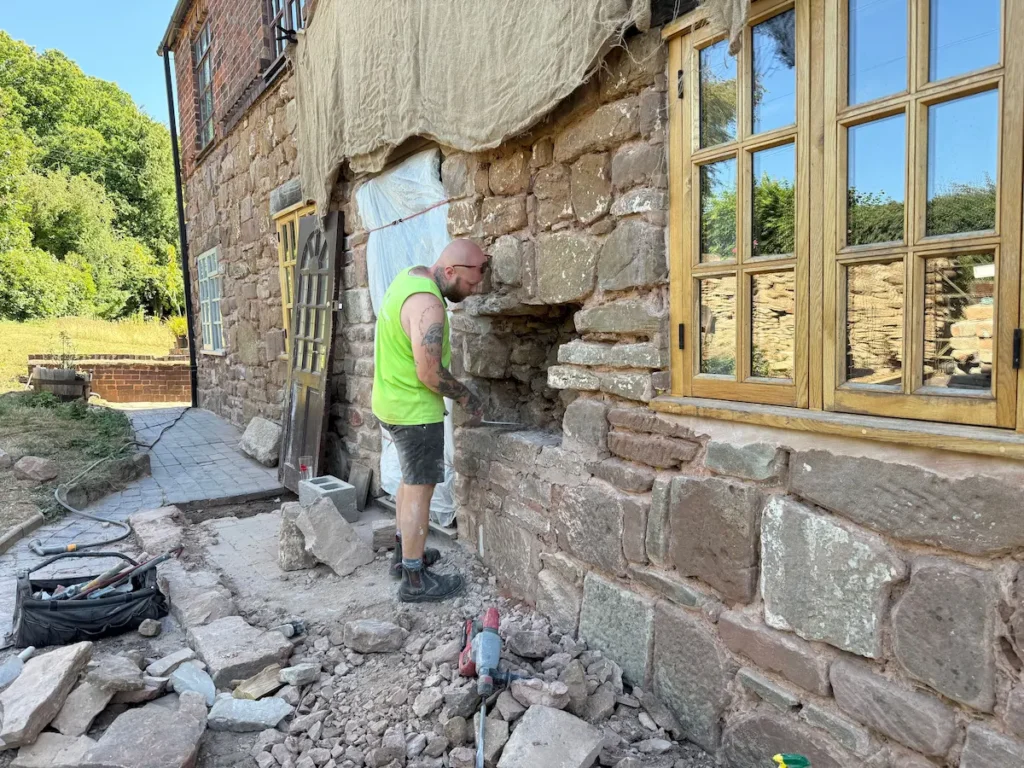
Shropshire is stone county – from the sandstone villages of the south to the harder grey stone of the hills, traditional stonework is everywhere, and a lot of it is in need of sympathetic repair without the use of harsh cement based mortars and plasters. Based in Much Wenlock, I carry out lime-based stonework repairs across Shropshire for homeowners and property custodians who want repairs done correctly, with compatible materials that work with the building rather than against it.
Stonework repairs on older properties aren’t a job for cement and a bag of ready-mix. The materials matter, the specification matters, and the approach matters — particularly on listed buildings or structures where the wrong repair can cause more damage than leaving the problem alone.
You can contact me on 07904449728 or email me at naturallyplastered@gmail.com
Before any insulating lime plaster system is specified or installed, I carry out an onsite assessment first. Every older property is different — the masonry type, existing moisture levels, and how the wall currently manages breathability all influence which system is appropriate and which ones aren’t. A product that works well on a dry brick wall in Shrewsbury may be entirely wrong for a damp rubble stone cottage in the Shropshire Hills, and getting that call wrong causes problems that are far more disruptive and costly to fix than taking the time to get the specification right from the start.
There’s no one-size-fits-all answer when it comes to insulating traditional buildings which is exactly why I don’t offer just a single system. I recommend what’s right for the wall in front of me.
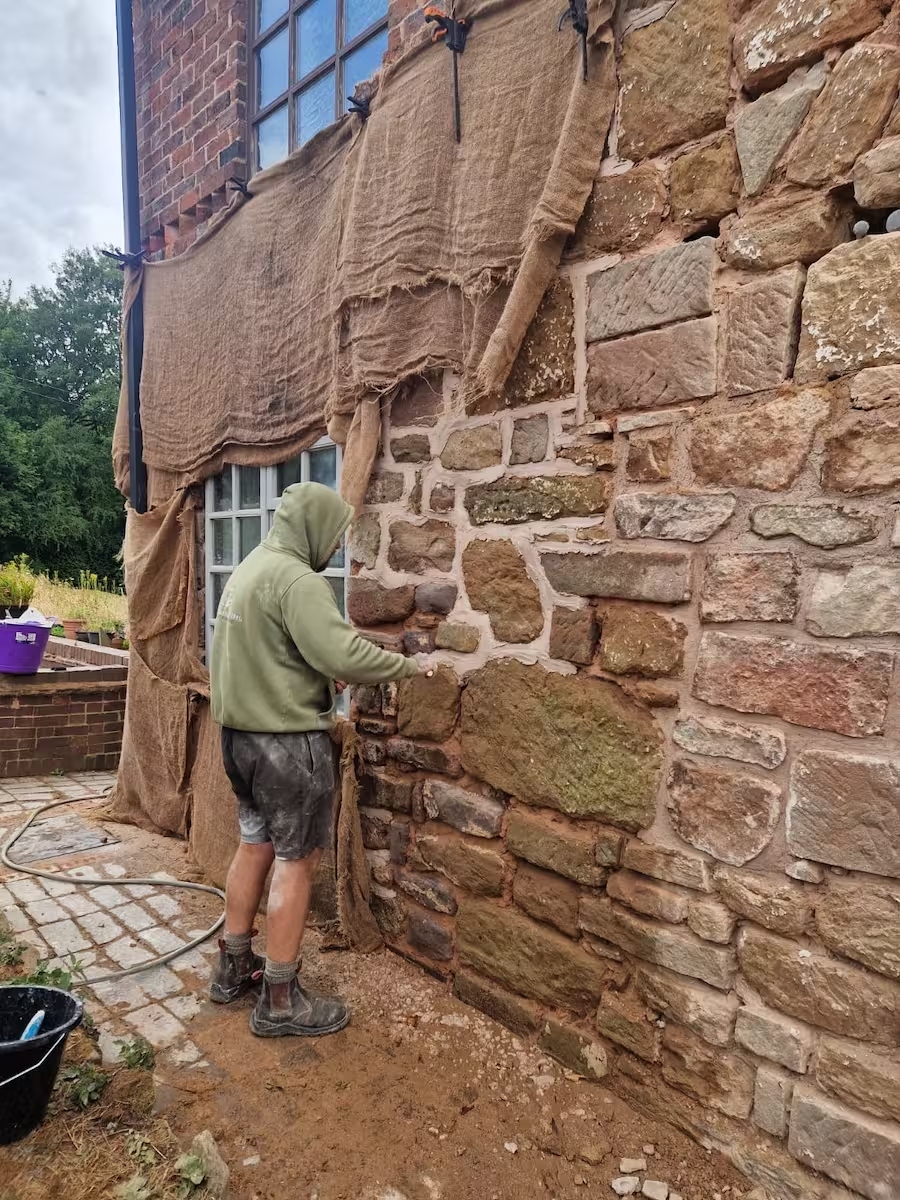
Loose, failing or eroded stonework is stabilised and consolidated using compatible lime-based mortars matched to the surrounding masonry. This kind of repair work is often picked up alongside lime pointing jobs — damaged stone that’s left unaddressed will continue to deteriorate behind even the best repointing work.
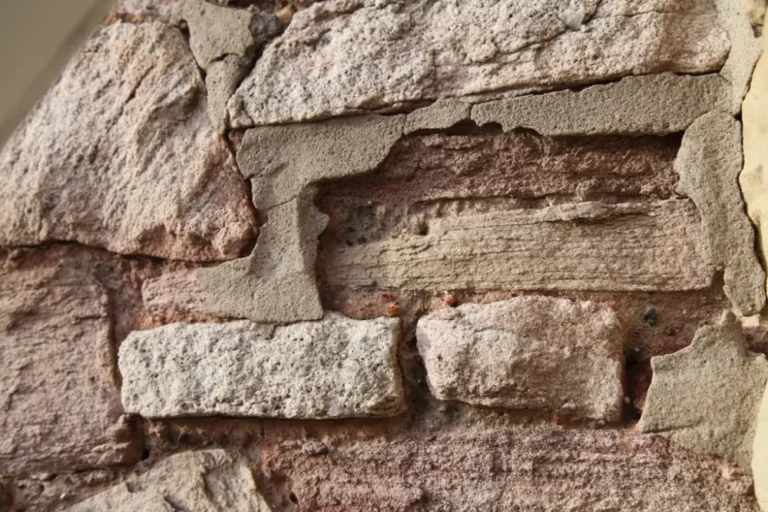
Spalling is common on softer Shropshire sandstone, particularly on exposed elevations or where cement pointing has trapped moisture against the stone face. Damaged areas are carefully repaired using lime-based mortars and aggregates selected to match the colour, texture and porosity of the surrounding stone as closely as possible.
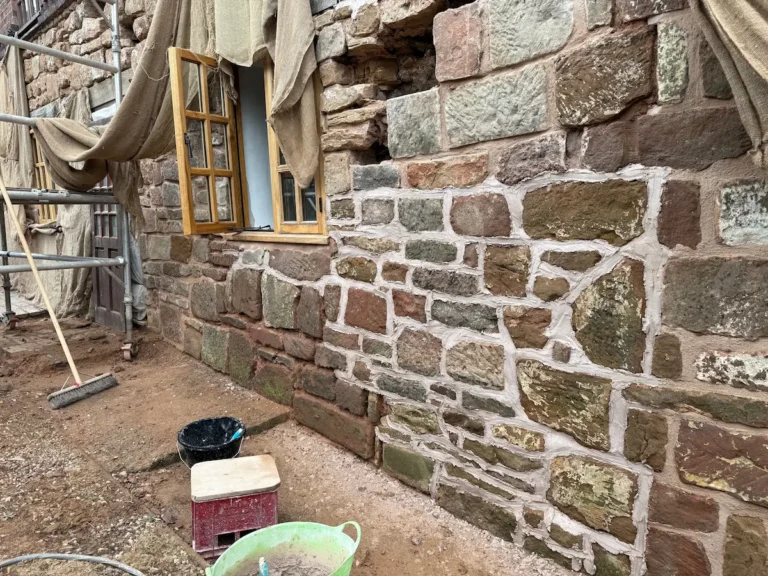
Where sections of stonework have failed structurally — collapsed sections of garden wall, damaged quoins, or deteriorated sections of boundary wall — I carry out small section rebuilds using reclaimed or matching stone and appropriate lime mortars throughout. No cement, no shortcuts.
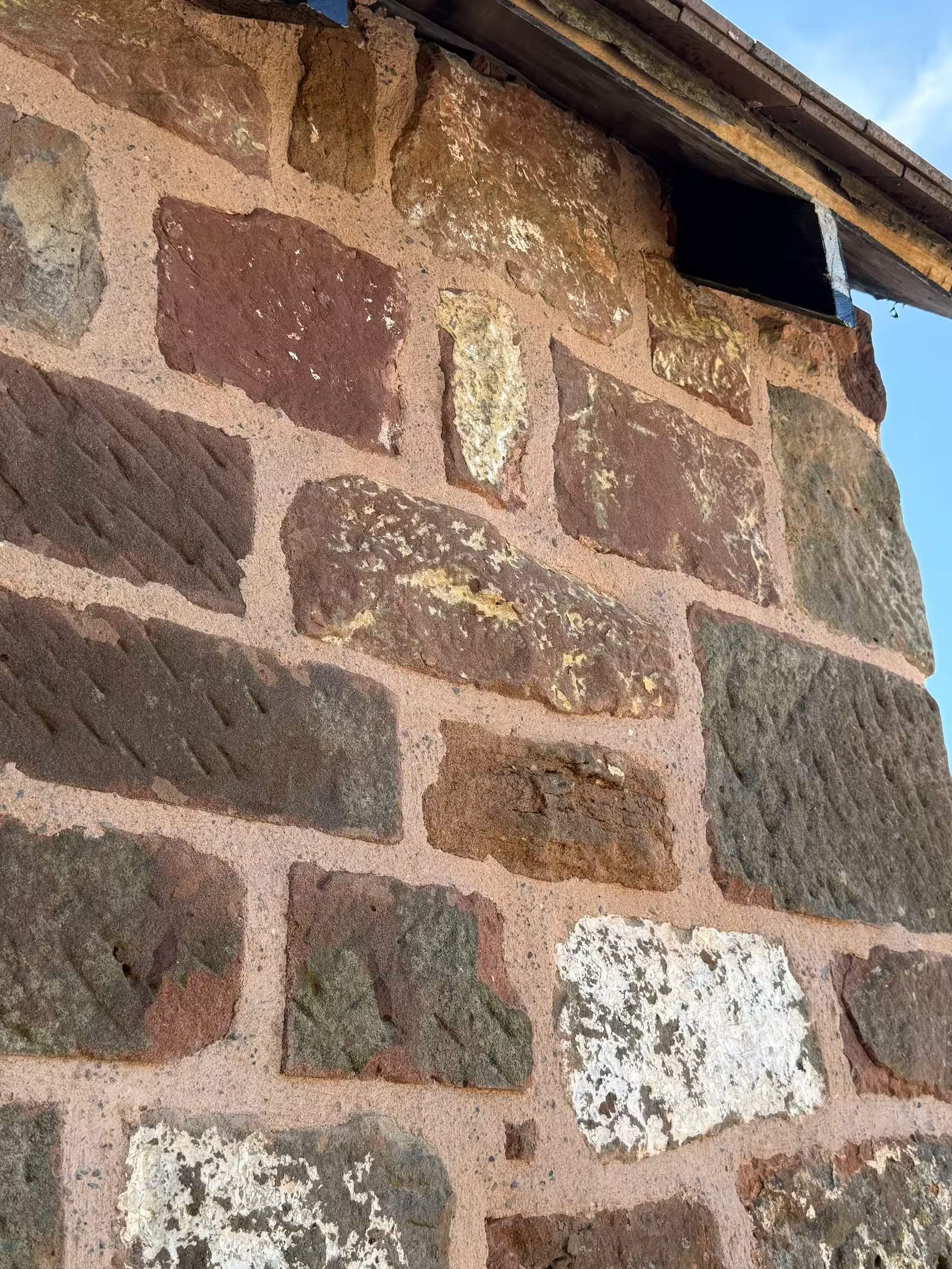
Loose or rocking stones, open joints and minor structural movement can often be addressed through careful pinning and consolidation before the situation develops into something more serious. Early intervention with the right materials is almost always less disruptive and less costly than leaving it to worsen.
The most common mistake in stonework repairs is using a mortar or repair material that’s harder or less breathable than the stone it’s sitting against. Cement is the obvious culprit — it’s been used widely on traditional stone buildings across Shropshire for decades, and the damage it causes is well documented. But even some lime products can be over-specified for softer historic masonry if the strength isn’t matched correctly to the substrate.
Every repair I carry out starts with understanding the stone — its hardness, its porosity, and how it’s currently behaving. The mortar or repair mix is then selected to be slightly softer than the surrounding material, ensuring that any future movement or moisture is accommodated by the repair rather than the original fabric of the building
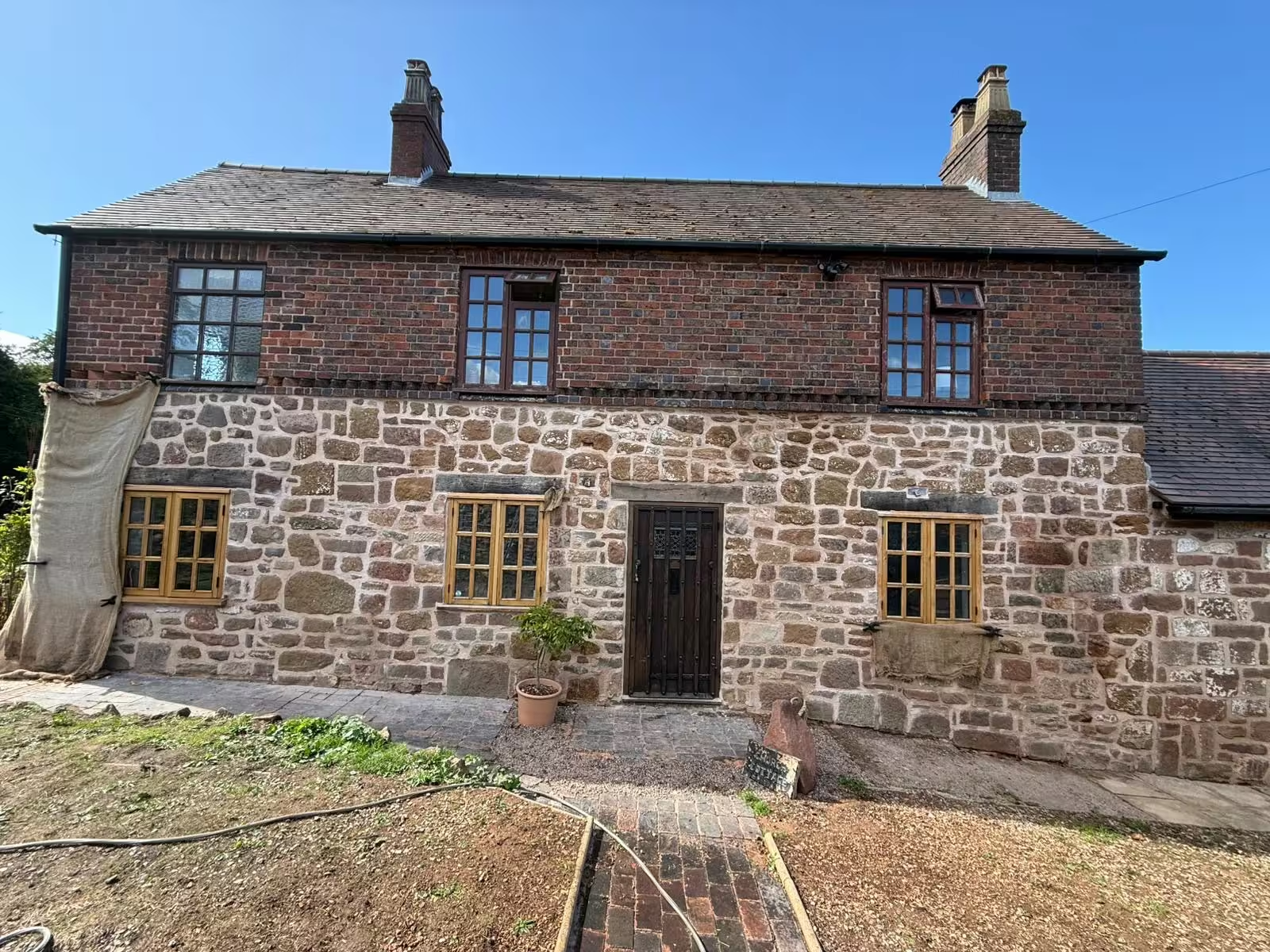
Stonework repairs sit naturally alongside lime pointing and lime plastering — in many cases they’re part of the same project, and being able to handle all three with the same material principles and the same care means nothing gets handed off or compromised between trades. Every repair is carried out using lime throughout, with material selection based on the specific demands of the stone and the building.
Covering Much Wenlock, Shrewsbury, Ludlow, Bridgnorth, Telford, Church Stretton, Oswestry and the wider Shropshire area.
If you’re looking for lime plastering, lime pointing or stonework repair in Shropshire then please feel free to get in touch via the form below.
Every property and every job is a unique story, requiring an in-person survey to enable us to give you the best advice. To arrange a tailored on site quote, please use the form below or give us a call to get in touch.
I regularly post all of my current lime plastering and lime pointing work across Shropshire and daily updates on Instagram! Give me a follow or check out my page to keep up to date or get touch.
Stonework repairs on older properties raise more questions than you might expect — particularly around what’s actually repairable, what materials should be used, and whether a repair is the right call or whether something more structural needs addressing. Below are the questions I hear most often. If yours isn’t covered, give me a call — I’m happy to take a look at what you’ve got before any decisions are made.



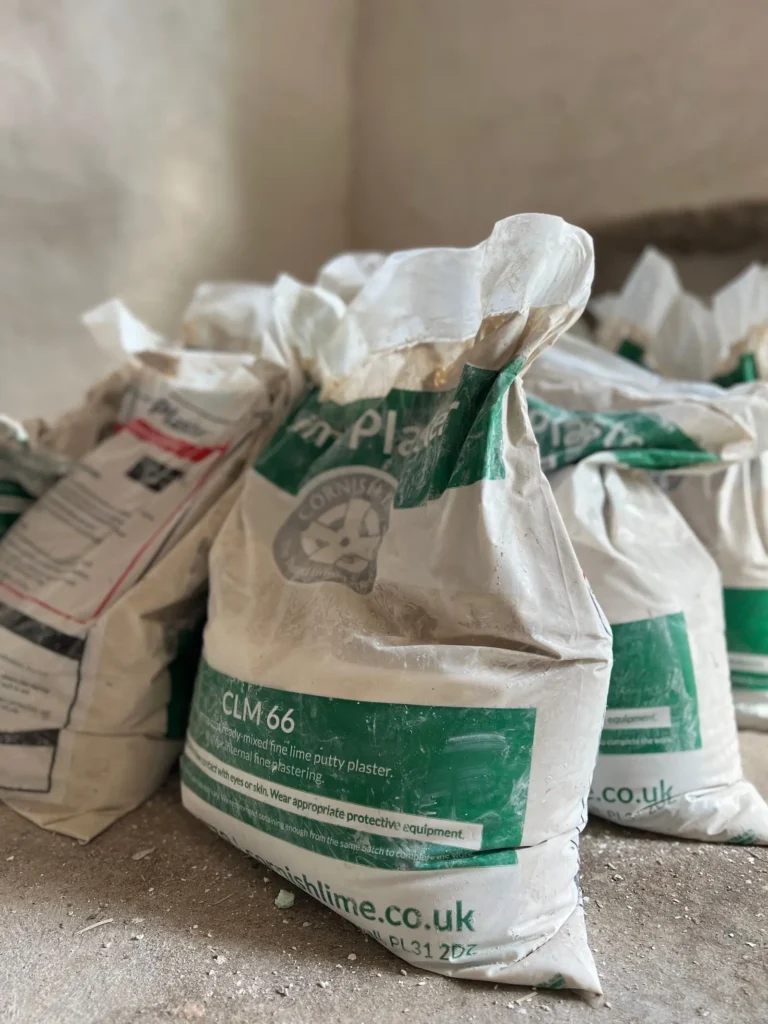
Most general builders will patch stonework with whatever’s to hand — often cement, often too strong, and often causing more damage to the surrounding masonry than the original problem. Stonework repairs on traditional Shropshire properties need a different approach entirely, and that starts with using materials that are genuinely compatible with the stone they’re sitting against.
At Naturally Plastered, stonework repairs are carried out exclusively using lime-based mortars and repair mixes — the same material principles that run through every other aspect of my work. That consistency matters. A building repaired with compatible materials throughout performs better, lasts longer, and avoids the kind of conflicting material issues that cause problems further down the line.
Shropshire has an enormous variety of traditional stonework — sandstone, limestone, rubble stone, dressed stone — and each demands a different specification. Understanding that, and taking the time to get the material selection right before work starts, is what separates a repair that lasts from one that fails within a few seasons.
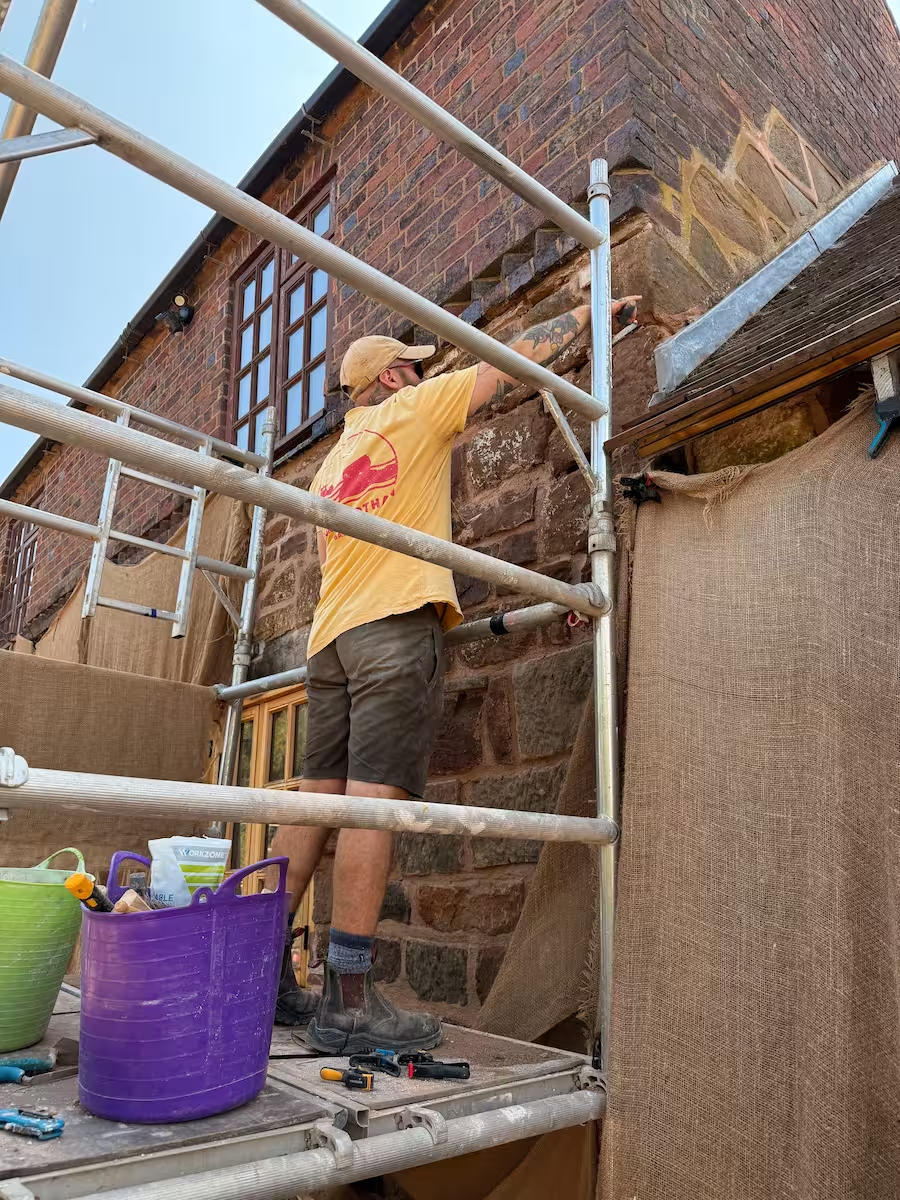
From replacing incorrectly applied gypsum plasters on a townhouse in Shrewsbury to restoring beautiful farmhouses in Market Drayton and renovating small cottages in Bridgnorth, I’ve been kept busy lime plastering just about everywhere in Shropshire. Here’s what some of my clients have said..
Three-coat lime plaster systems using traditional non-hydraulic lime mortars.
Improve comfort and thermal performance of older properties whilst maintaining breathability.
Traditional stone repairs, rebuilding stonework and masonry conservation in Shropshire.
Breathable repointing for stone and brick buildings using appropriate lime mortars.
WhatsApp Me

Currently Accepting New Projects
Traditional Lime Plastering and Heritage Lime Pointing Services for Shropshire’s Older Properties.
Send A Message
Fill in the form below and I will be in touch as soon as possible to discuss your requirements.
No spam. Your details are only used to contact you regarding your enquiry.